Bringing Digital Charm to Life: Printing Your Own Cute Fat Hamster
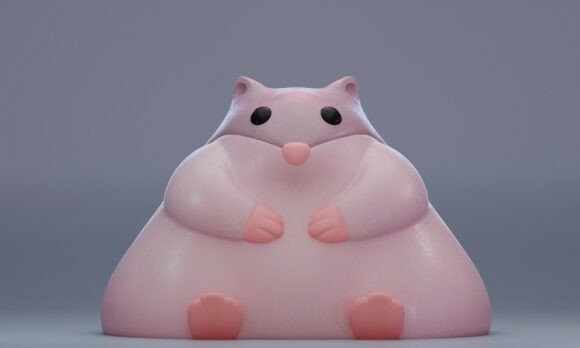
The charm of miniature figurines is timeless, but the ability to create them yourself, with precision and personal flair, represents a significant shift in modern hobbyism and creative expression. The Cute Fat Hamster 3D Print Model exemplifies this shift perfectly. It is a meticulously designed digital sculpture, a single-piece model file optimized for 3D printing, ready to be transformed from a concept on your screen into a tangible, adorable object in your hand. Its relevance lies not just in its endearing design, but in its role as a gateway project—a testament to how accessible and reliable desktop 3D printing has become for creators of all skill levels.
From Digital Asset to Physical Collectible
This model exists as an STL and 3MF file, formats that serve as the universal blueprint for 3D printers. The critical detail is that it’s a single, unified piece. This design choice eliminates the frustration of assembling multiple parts, ensuring the final print is a solid, cohesive figurine. The model’s dimensions—9 cm in width, 9.3 cm in length, and 6 cm in height—make it a perfect desk accessory, a delightful gift, or a charming addition to a collection. It’s a project that fits neatly into the workflow of a busy professional looking for a creative outlet, a parent crafting a unique toy, or an entrepreneur prototyping a product line of niche collectibles.
Optimization for Modern Desktop Printing
The evolution of consumer 3D printing is marked by a move away from complex, technical hurdles toward streamlined, reliable experiences. This hamster model is designed to capitalize on that evolution. It has been specifically tested on the Bambu Lab A1 Mini, a printer renowned for its user-friendly operation and consistent output. The recommended settings are a blueprint for success: using a standard 0.4 mm nozzle, three wall loops for strength, a sparse 15% infill to keep it lightweight yet solid, and a 0.2 mm layer height for a smooth finish. Most importantly, the model is engineered to print without any support structures. This is a significant practical implication, reducing print time, minimizing material waste, and eliminating the post-processing hassle of removing supports, which can often mar the surface of a print.
The Role of Material Choice in Final Character
Material selection directly influences the personality of the final object. The recommendation to use eSun ePLA Matte filament is a thoughtful one. Matte PLA finishes absorb light differently than standard glossy PLA, giving the printed hamster a softer, more tactile quality that enhances its cute, chubby aesthetic. It avoids the plastic-y shine that can make some prints look cheap, resulting instead in a finish that feels premium and delightful to hold. This attention to material pairing shows how the hobby has matured; it’s no longer just about making an object, but about crafting an object with specific emotional and tactile qualities.
Integrating Creativity into Daily Routines
For many adults, the appeal of such a project lies in its manageable scale and guaranteed outcome. It fits into changing creative habits where people seek satisfying projects that don't require vast investments of time or steep learning curves. A professional can queue the print during a workday and have a finished piece by evening. An educator can print a batch as engaging visual aids or rewards. The model’s friendly design aligns with broader market preferences for content that sparks joy and personalization in our environments. It’s a piece of functional art, a testament to the capability sitting on your desk, and a conversation starter about the blending of digital design and physical creation.
Practical Observations and Printing Insights
Following the provided settings with the specified hardware and material should yield a excellent result. A key observation is the importance of the "no support" design. When loading the model into your slicer software, you can confidently disable support generation, trusting the model's geometry. This efficiency is a core part of modern 3D printing expectations—users demand designs that are not only cute but also smart and practical to produce. The total print time will be relatively short given the size and settings, making it an ideal first print on a new machine or a reliable stress-free project when you want a guaranteed success.
The Bigger Picture: Democratizing Design and Manufacture
The Cute Fat Hamster 3D Print Model is more than just a figurine; it’s a micro-example of a macro trend. It represents the democratization of small-scale manufacturing and personalized production. For hobbyists, it’s pure enjoyment. For freelancers and small business owners, it could be the start of a line of unique branded merchandise. The file is a digital asset that can be reproduced anywhere, anytime, aligning perfectly with remote, distributed workflows. This model doesn’t promise to change the world, but it realistically demonstrates how technology has empowered individuals to fill their world with custom, high-quality objects that were once only available through mass retail.
Ultimately, printing this cute fat hamster is a simple, accessible joy. It connects the digital creativity flourishing online with the physical world we inhabit. It requires no expert skills, yet the result is professional and charming. It stands as a perfect example of how 3D printing has evolved into a tool for immediate, personal creation, satisfying the human desire to make, to customize, and to surround ourselves with objects that tell our stories and spark a smile.