The Alien Mask: A Versatile Model for Halloween, Display, and Creative Business
In the realm of 3D printing and creative design, finding a single model that serves multiple distinct purposes with genuine practical value can be a challenge. The Alien Mask is a noteworthy exception. This is not merely a Halloween costume piece; it is a thoughtfully designed 3D model engineered for functionality, adaptable aesthetics, and commercial potential. Its value lies in its dual role as a wearable item and a decorative object, coupled with design choices that address common usability issues in printed masks.
Key Design Characteristics and Functional Intent
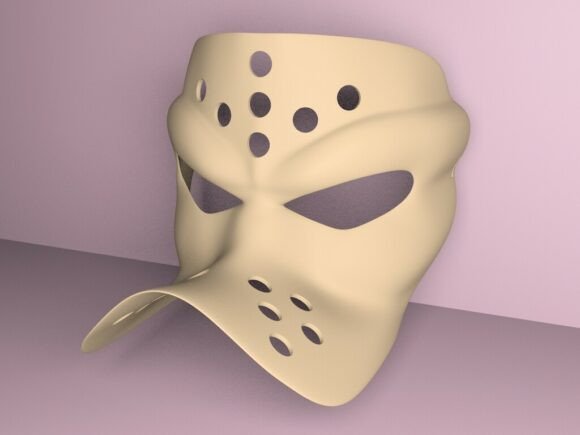
At its core, the Alien Mask is a stylized face covering featuring a distinctive hexagonal grid pattern over the eye area. This pattern is not purely aesthetic; each hexagon acts as a viewing hole, providing the wearer with a clear field of vision while maintaining the mask’s enigmatic appearance. This practical consideration separates it from many costume masks that prioritize looks over wearability.
The design further integrates two oval holes on the back of the mask. These are specifically provided for attachment. The designer’s intent is clear: flexibility. You can utilize an elastic strap with Velcro, repurpose the elastic from an old face mask, or even use a simple rubber band. This open-ended approach means almost any available material can secure the mask comfortably, reducing the need for specialized hardware. Additionally, two dedicated holes at the nose area facilitate easier breathing, a common oversight in full-face wearable prints that can lead to discomfort.
Strengths in Usability and Application
The primary strengths of the Alien Mask are its versatility and user-centric design. It is explicitly unisex and can be scaled from adult to child sizes during the printing preparation stage, making it a single-file solution for households or events with diverse participants. Its applications are tri-fold: as a Halloween mask, as a fun prop for parties or creative photography, and as a piece of wall art. When printed with care, especially in resin, its geometric details can produce a striking decorative object for a studio, gaming room, or office.
For creators and small businesses, the availability of multicolour files adds significant value. This allows for more complex, visually appealing prints without the need for post-print painting, which can be a barrier for those selling physical products. The model is compatible with both FDM and resin printers and works reliably with common filaments like PLA, PETG, and ABS. This broad compatibility ensures that most makers can utilize it with their existing setup.
Practical Performance and Real-World Considerations
In real-world use, the Alien Mask performs well within its intended contexts. As a wearable, its success depends heavily on print material and scaling. A PETG print offers more durability for active wear, while a high-detail resin print is better suited for display. The breathing holes are a functional benefit, though for extended wear, the mask’s coverage—like any full-face design—can feel restrictive, a factor users should anticipate.
Its effectiveness as wall art is straightforward. The design’s inherent structure and the shadow play from the hexagonal grid create visual interest. Printing in a matte filament or with a finish can enhance this aesthetic effect. The commercial permission to print and sell the physical model is a clear practical advantage. However, the prohibition against sharing or selling the digital files itself is a standard and important licensing distinction, protecting the designer’s work while allowing for entrepreneurial use of the printed object.
Audience Fit and Ideal Use Cases
This model aligns with the needs of several groups. Serious hobbyists and home printers benefit from a single, tested model that serves multiple seasonal and decorative needs. Small business owners operating in niches like costume accessories, festival merchandise, or unique home decor can leverage it to create a sellable product without design overhead. Educators in makerspaces or design classes might use it as a practical example of functional design principles. Content creators and photographers could employ it as a reliable, reusable prop.
It fits particularly well into workflows that prioritize efficiency and multi-purpose assets. For someone managing a 3D printing service or an online store selling creative goods, having a model that can be marketed for Halloween, as art, or as a party item across different product categories is a strategic asset.
Observations on Long-Term Value and Limitations
The long-term value of the Alien Mask model is sustained by its non-ephemeral applications. While Halloween has a seasonal peak, its utility as wall art and a prop is year-round. The design’s relative simplicity also suggests it will remain printable across evolving printer technologies. A potential limitation lies in its very adaptability; as a wearable, achieving a perfect, comfortable fit for every head shape solely through scaling may require some trial and error on the printer’s part. Furthermore, its impact as wall art is maximized by print quality and size—a small, hastily printed FDM version may not command the same presence as a large, finely finished piece.
Overall, the Alien Mask represents a balanced and useful digital asset. It solves practical wearable issues, opens legitimate commercial opportunities, and extends into decorative permanence. Its worth is not in hyperbole, but in its documented features: the functional hexagon grid, the adaptable attachment system, the breathing vents, and the explicit permission to manufacture and sell. For professionals and creators evaluating tools, it stands as a considered design that efficiently serves multiple intent.